
What to do in the first day after sending money
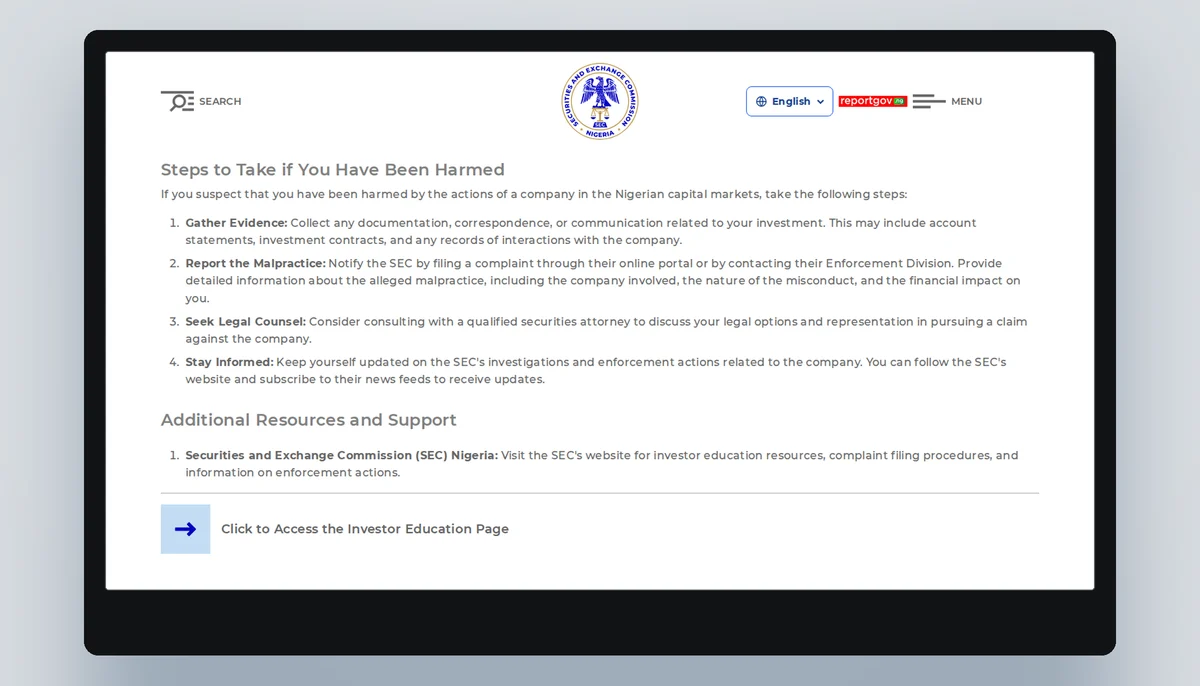
If you have sent money on a doubtful promise, the first day matters. Contact your bank or payment provider to ask what can be done, keep all records, and report to the SEC, the EFCC or the police cybercrime unit. Recovery is not guaranteed. Anyone offering to recover funds for a fee deserves the same checks as the original platform.
Contact the bank or payment provider
Call your bank or the payment provider you used. Ask what can be done. If you used a bank transfer, ask if the transfer can be reversed or frozen. If you used a card, ask about a chargeback. The bank may say no, but asking starts a record. The bank may also flag the recipient account for suspicious activity.
The bank is not obligated to reverse a transfer you authorised. But the bank can investigate. The bank may ask for details: the amount, the date, the recipient's name and account number. Provide everything. The bank's fraud department may be able to contact the recipient's bank. The sooner you call, the better the chance of stopping the money.
Keep all records
Keep every record: screenshots of chats, emails, bank statements, the platform's website, and any promises. Save them in a safe place. Do not delete anything. The records are evidence for the bank, the regulator, or the police. The records should show the platform's name, the promises made, and the payment details.
If the platform communicated through a chat app, take screenshots before the chat is deleted. The platform may block you or delete the conversation. The records are your proof. The more complete the record, the stronger your case. The record should include the date and time of each communication and the name of the person you spoke to.
Report to the SEC
The SEC Nigeria accepts complaints about unregistered investment schemes. You can report through the SEC's website or by visiting their office. The SEC may not be able to recover your money, but your report adds to their warnings. The SEC may investigate and publish a warning about the platform, which helps others.
The SEC's complaint form asks for details: the platform's name, the amount, the date, and the promises made. Provide as much as you can. The SEC may also ask for your bank statement showing the transfer. The SEC does not guarantee recovery, but the report is important. It tells the regulator that the platform is active.
Report to the EFCC or the police cybercrime unit
The EFCC investigates economic and financial crimes. The police cybercrime unit handles online fraud. You can report to either or both. The report should include the same records: the platform's name, the promises, the payment details, and any communication. The EFCC may freeze accounts or arrest suspects.
The police may take a statement and open a case. The process can be slow. The EFCC may ask for a formal petition. The report is a necessary step if you want law enforcement to act. The report also creates a record that can be used in court. The police and the EFCC do not guarantee recovery, but they are the authorities with the power to investigate.
Recovery is not guaranteed
The money may be gone. The platform may have moved it to another account or converted it to cryptocurrency. The bank may not be able to reverse the transfer. The regulator may not be able to recover it. The police may not find the suspects. You should not count on getting the money back.
Anyone who promises to recover your money for a fee deserves the same checks as the original platform. Recovery scammers target victims of investment scams. They promise to get the money back for an upfront fee. They may claim to be hackers or lawyers. They are not. Do not pay anyone to recover your money. Report the recovery offer to the same authorities.
What to do next
After the first day, keep following up. Check with the bank for any updates. Keep the records safe. If the platform contacts you again, do not send more money. The platform may promise a refund if you pay a fee or deposit more. That is a common tactic. Do not fall for it.
If you reported to the SEC, the EFCC, or the police, keep a record of your report. Ask for a reference number. The process may take time. The authorities may ask for more information. Be patient. The most important thing is to stop sending money and to warn others. Share your experience with friends and family so they do not fall for the same promise.
Check whether the receiving account still exists
The first practical step is to ask your bank whether the account you paid into is still open. Banks close accounts when they see unusual inflows or when another customer has reported the same account. An account that was open hours ago may be gone by the time you ask. The bank will not tell you the account holder's name or other details, but it can confirm whether the account is active.
A closed receiving account changes what you should do next. If the account is closed, the bank's fraud team becomes the main route for a recall request. If the account is still open, the bank may be able to place a temporary hold while you explain what happened. Do not wait for the platform's support chat to give you a new account number; that is a common way to move money out of reach.
Ask the bank to record your complaint in writing and give you a reference. The reference number is what you will use in every later conversation with the bank, the regulator or the police. Without it, the bank may treat the matter as an enquiry rather than a disputed transfer. Keep the reference next to the proof of payment and the platform's promise.
Ask the platform for a receipt that names the legal entity
A deposit confirmation that shows a wallet address or a trading balance is not a receipt. A receipt names the company that received the money, states what the payment was for, and shows the date and amount. Ask for this in writing, through the same channel you used to send money. If the platform sends a screenshot instead of a document, treat that as a refusal.
The name on the receipt matters more than the name on the website. A platform may advertise one name, bill under a second, and receive money into an account held by a third. The receipt forces the platform to put one legal name on paper. If the receipt shows a name you have never seen, that is a fact to record, not a reason to panic.
Do not accept a promise that the receipt will come later. A platform that can display a balance immediately can generate a receipt immediately. The longer the delay, the less likely the receipt will arrive. If the platform says its system cannot produce receipts, ask for a simple letter on company letterhead stating the payment and the legal entity.
Write down the exact withdrawal steps you were promised
The day you send money is the day the withdrawal promise matters most. Write down, in your own words, every step the platform said you would need to take to get money back: the minimum withdrawal, the processing time, any fee, any verification, any waiting period. Do this while the conversation is fresh. Memory changes quickly under pressure.
Compare what you write with what the platform actually said. If the platform promised withdrawals within a set number of hours, note that. If it said withdrawals depend on trading volume or on making a profit first, note that too. The written record becomes evidence of what you understood before the money moved. Later, when the story changes, you will have a fixed point.
This note is not for the platform. It is for you and for anyone who investigates. Write it in plain language, without technical terms. If you have screenshots of the platform's withdrawal rules, attach them. If you do not, your own note is still useful. The point is to capture the promise before the platform edits its help pages.
Test the withdrawal route in the smallest way the platform allows
Most platforms have a minimum withdrawal amount. The day after depositing, try to withdraw that minimum. Do not wait for the balance to grow. If the withdrawal works, you learn that the route is real at least for small amounts. If it fails, you learn that immediately, while your bank can still act on the original transfer.
A failed withdrawal on the first day is not proof of anything criminal. It may be a system error or a verification step you missed. But the platform's response tells you a lot. A platform that fixes the problem and explains what happened is different from one that says the system is down, asks you to deposit more, or stops replying.
If the withdrawal fails, record the exact error message and the time. Then ask the platform to put the reason in writing. A written reason can be checked later. A verbal reason cannot. The goal is not to get your money back today; the goal is to create a record of what the platform said when the route failed.
Separate what the platform shows from what your bank confirms
The balance on the platform's screen is a number the platform displays. It is not money in your bank account. The only balance that matters for getting money back is the one your bank shows. Do not compare the two as if they were the same thing. A platform balance can rise while your bank balance stays flat.
Ask your bank for a transaction record that shows the debit from your account. Keep that record separate from any screenshots of the platform. The bank record is evidence of what left your account. The platform screenshot is evidence of what the platform claims. They are two different documents with two different uses.
If the platform says your deposit has grown, ask what the growth is based on. A trading profit, a referral bonus, a promotional credit: each has a different withdrawal rule. Do not accept a single number without a label. The label determines whether the platform will ever let you withdraw it.
Decide who you will tell and when
The first day is not the day to keep quiet. Tell one person you trust that you sent money and why. Choose someone who will not mock you but will help you stay calm. The conversation forces you to explain the promise in plain words. Often, hearing yourself say it out loud is enough to see which parts do not hold.
If you decide to report to the SEC or the police, do it in the first few days, not weeks later. Evidence is easier to gather while messages are still in your phone and the receiving account is still visible to your bank. A report made early does not commit you to anything; it simply puts the facts on record.
Do not let shame delay the report. The regulator's warnings exist because many people send money on doubtful promises. A report is not an admission of foolishness; it is a description of what happened. The more people report the same pattern, the sooner the regulator can act.
Key facts
Read next
The last questions before paying
Can the bank reverse my transfer?
It depends. If the transfer is still pending, the bank may be able to stop it. If it has been completed, the bank may not be able to reverse it. But you should ask. The bank can investigate and may freeze the recipient's account.
Should I report to the SEC or the EFCC?
Both. The SEC handles investment schemes, and the EFCC handles financial crimes. Reporting to both increases the chance of action. The police cybercrime unit is also an option.
Should I pay someone to recover my money?
No. Recovery scammers target victims. They promise to get the money back for a fee. They cannot. Report the recovery offer to the authorities. Do not pay anyone.
What if the platform offers a refund if I pay a fee?
Do not pay. That is a common tactic to get more money. The platform will not refund you. They will take the fee and disappear. Report the new demand to the authorities.
Can I get my money back through a chargeback?
If you paid by card, you may be able to file a chargeback with your bank. The bank will investigate. A chargeback is not guaranteed, but it is worth asking. Provide all the records.
Open a CFD account with FxPro
If you want to trade CFDs after doing your own checks, FxPro offers currencies, metals, indices, shares and crypto on several platforms. This site is not the broker and takes no money from you.