
What to have in hand before a first deposit
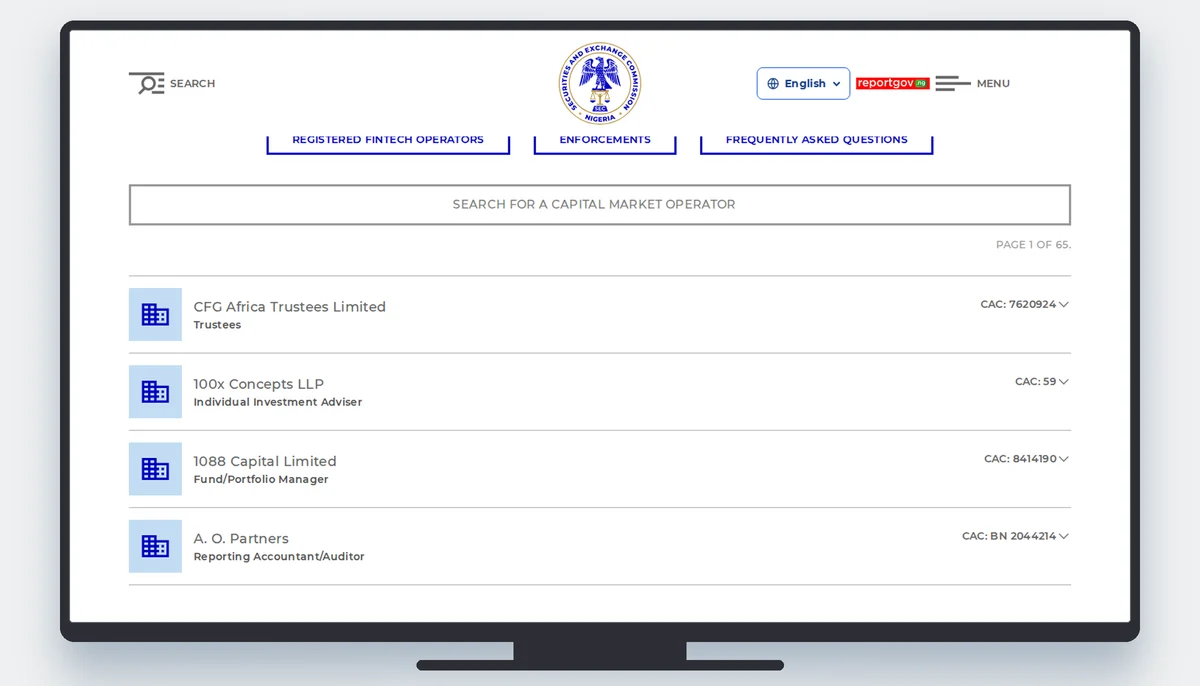
Before any deposit, a reader should have in hand the exact legal name and registration details, the regulator named, a written statement of how withdrawals work, an independent way to contact the company that is not a chat app, and a record of every promise. This page frames each as a question the reader can put, never as an instruction.
The exact legal name and registration details
Ask: what is the exact legal name of the company, and where is it registered? The answer should be a name that can be searched in a public register, such as the Corporate Affairs Commission in Nigeria or a foreign equivalent. The name on the platform's website may be a trading name, not the legal name. A trading name cannot be searched. The legal name is the one in the contract.
Ask for the registration number and the country of registration. If the company is registered in Nigeria, the CAC register can be searched. If it is registered abroad, the relevant foreign register can be searched. The registration details should match the platform's claims. A mismatch is a red flag. The reader should not deposit without the legal name and registration details in writing.
The regulator named
Ask: which regulator supervises this company? The answer should be a specific regulator, such as the SEC Nigeria, the FCA in the UK, or another national authority. The regulator's name should be checkable on the regulator's own register. A platform that names no regulator is a warning. A platform that names a regulator but is not on that regulator's register is a bigger warning.
The SEC Nigeria has a register of registered operators. If a platform claims to be registered with the SEC, check the register. If it is not there, ask why. The regulator's role is to supervise the company's conduct. Without a regulator, the reader has no recourse. The question is not whether the platform is regulated, but which regulator and whether the claim is true.
A written statement of how withdrawals work
Ask: how do withdrawals work? The answer should be in writing: the method, the fees, the processing time, the limits, and any conditions. A platform that cannot provide a written withdrawal policy is not ready for deposits. The withdrawal route often follows the deposit route. If the reader deposits by bank transfer, the withdrawal may come back to the same bank account.
The written statement is evidence. If the platform later changes the terms, the reader has a record. The statement should cover the minimum and maximum withdrawal amounts, the currency, and the time from request to payment. A vague answer is not enough. The reader should have the withdrawal terms in hand before sending money.
An independent way to contact the company that is not a chat app
Ask: how can I contact you outside this chat? The answer should be a phone number, an email address, and a physical address. The phone number should be answered by a person who can answer questions. The email should be on the company's domain, not a free email. The physical address should be checkable on a map.
A platform that only communicates through a chat app is hard to reach when something goes wrong. The chat app is controlled by the platform. An independent channel, such as a phone call to a listed number, gives the reader a way to verify the company's existence. The reader should test the contact before depositing. A call that goes to voicemail is a sign.
A record of every promise
Ask: can you put that promise in writing? Every promise about returns, bonuses, or guarantees should be in writing. The platform may make promises in a chat or on a call. Those promises are not recorded unless the reader records them. A written promise is evidence. If the platform refuses to put a promise in writing, the promise is not worth much.
The reader should keep a record of all communications: screenshots of chats, emails, and notes of calls. The record should include the date, the time, and the name of the person who made the promise. The record is useful if the reader needs to complain to a regulator or a bank. The reader should not rely on memory. The record is the reader's protection.
The questions as a whole
The five questions are a checklist. The reader should have all five answers in writing before depositing. The answers should be consistent. A platform that answers one question but dodges another is not ready. The checklist is not a guarantee of safety. A platform can lie. But the checklist makes the lie harder and gives the reader a record.
The reader should compare the answers with public registers. The legal name should be searchable. The regulator should confirm supervision. The withdrawal terms should be clear. The contact should work. The promises should be written. If any answer is missing, the reader should not deposit. The checklist is for the minute before a transfer.
The deposit address itself is a check
Before any transfer, look at the account name on the payment instructions. If it does not match the legal name the platform gave you, stop. A mismatch means the money is going to a different entity than the one you checked. That breaks the chain of evidence you have been building, and it leaves you with no written link between your payment and the platform's stated identity.
Ask for the account name in writing before you send anything. If the platform says the receiving account belongs to a third party or a payment processor, ask why and get that explanation in writing. A legitimate business can use a processor, but the paper trail must show the connection. Without that, a dispute later becomes a dispute with a stranger, not with the company you investigated.
Also check the account number against the bank's own records if you can. Some banks show the account name before you confirm a transfer. If the name shown is different from what you were told, do not proceed. This single check costs nothing and takes a minute, but it is the point where many wrong transfers become irreversible.
The regulator's warning has a date for a reason
When the SEC Nigeria publishes a warning about a platform, that warning carries a date. The date matters because a platform can change its name, its website, or its legal entity after a warning. A warning from two years ago may describe an operation that no longer exists under that name, but the people behind it may have moved to a new brand. The date tells you whether your check is fresh.
If the warning is old, do not assume the platform is now safe. Instead, check whether the regulator has published anything newer. Also check whether the platform's current name or registration appears in any later warnings. A gap in warnings does not mean the regulator has approved the platform; it only means no new warning has been published under that name.
A dated warning also helps you see the sequence. If the platform was warned about, then later changed its name, you can trace that change through registration records or news reports. The date is not a verdict on its own, but it anchors your other checks in time. Without a date, a warning is just a rumour.
The withdrawal route must be tested before you need it
A platform will describe how withdrawals work, but the description is not the same as the route working. Ask for the exact steps: what you request, how long it takes, what fees are deducted, and what happens if the request fails. Then ask for a written confirmation of those steps. If the platform refuses to give that in writing, treat the refusal as information.
Do not wait until you need the money to find out the route is blocked. Some platforms allow small withdrawals at first to build trust, then delay or freeze larger ones. Ask whether there is a minimum or maximum withdrawal amount, and whether the amount changes after a certain period. Get the answers in writing and keep them with your records.
A withdrawal route that works for someone else may not work for you, because the platform can change its rules at any time. Your only protection is the written record you hold. If the platform later contradicts that record, you have something to show your bank or the regulator. Without it, you have only a memory of a promise.
A written promise is only as good as the person who signed it
When you ask for a written statement of how withdrawals work, also ask who is giving that statement. A customer service chat agent may have no authority to bind the company. Ask for the statement on company letterhead, or at least from an email address that matches the company's domain. If the platform refuses to identify who is making the promise, the promise is weaker.
Check whether the person giving the statement has a name and a role. An anonymous promise is easy to deny later. If the platform says the statement is from a team or a department, ask which person in that team is responsible. You do not need a personal guarantee, but you need a point of contact if the promise is broken.
A written record without a signer is still better than no record, but a signer makes the record useful in a dispute. When you later contact the regulator or your bank, you can say who made the promise and when. That turns a vague complaint into a specific one, and it gives the investigator a place to start.
The first deposit should be the smallest test the platform allows
Before you send a large amount, send the smallest amount the platform will accept. This is not a way to earn money; it is a way to test the withdrawal route and the platform's behaviour with a sum you can afford to lose. If the platform refuses a small deposit and demands a larger one, that is a signal about how it treats new users.
The test deposit should follow exactly the same steps as a larger one would: same account, same name, same written confirmations. If the platform changes the process for a small amount, that change is information. A legitimate business should treat every deposit the same way, because the amount does not change the mechanics.
After the test deposit, try to withdraw it. Do not wait for it to grow, and do not add more money to 'unlock' a withdrawal. If the withdrawal works, you have one data point. If it fails, you have saved yourself a larger loss. The test is not a guarantee, but it is the cheapest way to see the platform's behaviour before you commit more.
Ask for the procedure before you have a problem
A platform that wants your deposit should be able to describe its own process in plain steps. Ask what happens if a withdrawal request is made on a public holiday, or if the account name on your bank does not match the name you registered with. A serious operator will have a written policy for these situations and will not improvise answers in a chat.
The order in which a platform asks for documents also tells you something. If it requests your bank statement and a copy of your ID before you have even funded the account, that is normal under Nigerian customer due diligence rules. If it only asks for these after you try to withdraw, the procedure is not designed for your convenience.
Request a copy of the full terms before the first transfer. Read the section on account closure and the section on chargebacks. Many disputes start because a customer did not know that a dormant account attracts a fee, or that a withdrawal below a certain amount is not processed. The minute before a deposit is the right time to ask for the procedure in writing.
Key facts
Read next
The last questions before paying
What is the most important question?
The legal name and regulator are the most important, because they are checkable in public registers. If the platform cannot provide them, or they do not match, that is a strong warning.
Should I ask for everything in writing?
Yes. A written record is evidence. If the platform refuses to put a promise or a policy in writing, that is a red flag. The written record protects you if something goes wrong.
What if the platform is not registered in Nigeria?
Many platforms are registered abroad. That is not automatically a problem, but you should check the foreign register and the regulator named. The SEC Nigeria's warnings are about unregistered platforms, but a foreign registration is not a guarantee of safety.
Can I trust a platform that has a physical address?
A physical address is a good sign, but it should be checkable. You can search the address online or call the company to verify. A fake address is easy to create.
What if the platform offers a bonus for depositing now?
A bonus is a marketing tool. It may come with conditions that lock your money. Ask for the bonus terms in writing. If the bonus requires you to trade a certain amount before withdrawing, that is a lock-in. Read the fine print.
Open a CFD account with FxPro
If you want to trade CFDs after doing your own checks, FxPro offers currencies, metals, indices, shares and crypto on several platforms. This site is not the broker and takes no money from you.